The wolf cut started as a straight hair trend, but on curls it becomes something else entirely. Shorter layers at the crown, longer length through the back, and all that bounce doing half the work for you.
It sounds easy, and mostly it is. But curls have their own rules, so knowing what to ask for (and what to avoid) makes the difference between a cut you love and months of regret.
What the Curly Wolf Cut Is

Think of it as a shag with a wilder attitude. Heavy, choppy layers up top give you volume at the crown, while the lengths taper down through the back like a mullet’s softer cousin.
On curls, the shape practically builds itself. Each layer springs up to its own length, so you get movement and texture without styling yourself into exhaustion every morning.
Who It Flatters Most

Round faces do beautifully with it, because the height at the crown and the longer front pieces draw the eye down and lengthen the look. Oval faces get an easy win too, since almost any layer placement works.
Very tight coils can still wear it, but the layers need to be longer and more blended so the silhouette stays balanced. If your curls shrink a lot, talk through the dry length with your stylist before a single snip.
How to Ask Your Stylist (With Photos)

Bring three or four photos of curly wolf cuts on hair like yours, not just the one viral image everyone saves. Point to the crown volume in one, the face framing in another, and tell them exactly what you like in each.
Use words like short, textured layers at the crown, longer, wispy length in the back, and face framing pieces that hit at the chin or collarbone. And say the magic sentence: please cut it dry, or at least mostly dry.
The Cut: Layers Explained
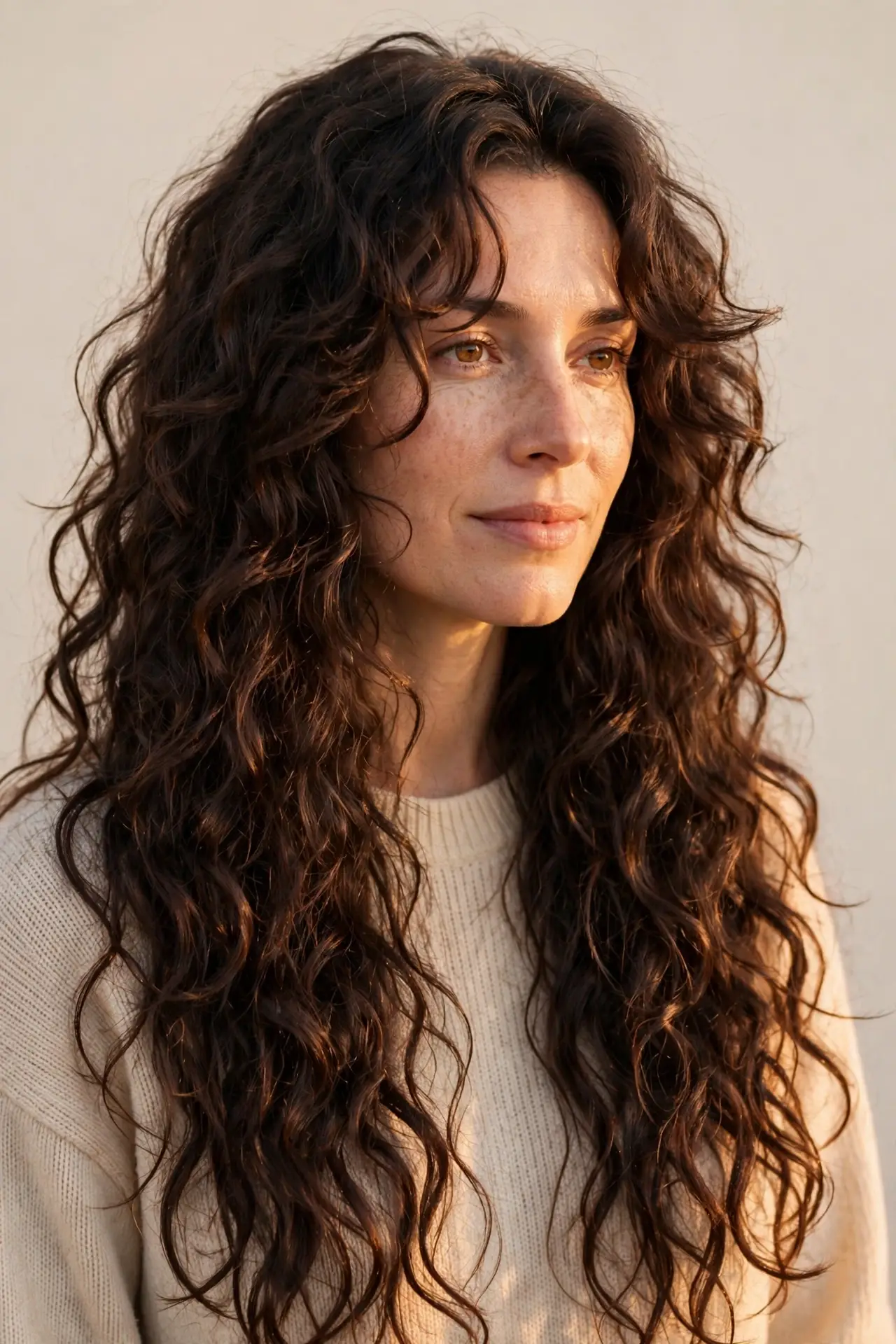
The crown gets the shortest layers, usually starting around the temples or cheekbones on curly hair. This is where the lift comes from, so these layers do the heavy lifting for the whole shape.
Through the mid lengths and ends, the layers stretch out longer and connect into that tapered back. Ask your stylist to point cut or razor the ends so nothing sits in a blunt shelf.
Styling Day to Day

Most days you can get away with a refresh rather than a full wash. Spritz your curls with water, smooth a little leave in through the mid lengths, and scrunch upward to wake the shape back up.
On wash days, style in sections so the product reaches every layer. Rake cream through soaking wet hair, scrunch, then leave it alone. Touching curls while they dry is how frizz starts.
Diffusing vs Air Drying

Diffusing gives you the most volume and definition, which is the whole point of this cut. Flip your head upside down, cup sections into the diffuser bowl, and use medium heat with low airflow.
Air drying works fine too and keeps things softer and more natural. Just be patient, because the thicker crown layers take longer to dry, and going out with damp roots can flatten everything by noon.
Growing It Out

The good news is the wolf cut grows out more gracefully than most layered cuts. The short crown layers catch up to the rest, and the shape slowly melts into a long shag, which is a pretty place to land.
Book a trim every ten to twelve weeks to keep the ends tidy and the layers connected. If the crown starts looking bulky as it grows, ask for a little internal layering rather than chopping length off the back.
Frequently Asked Questions
Will a wolf cut make my curly hair look too wide?
Not if the layers are cut right. Short crown layers add height, which balances width, and longer face framing pieces pull the eye downward. Tell your stylist you want height on top, not width at the sides.
Is the curly wolf cut hard to maintain?
It is one of the easier curly cuts to live with. The layers hide uneven growth, and the lived in texture is the whole point. A trim every ten to twelve weeks keeps it in shape.
Can I get a wolf cut if my curls are fine?
Yes, but ask for fewer, longer layers. Too many short layers on fine curls can make the ends look thin. Your stylist can build volume with the crown layers while keeping the ends full.
How long does it take to grow out?
It depends on your starting length, but most people find it grows into a long shag within six to eight months. Regular trims keep it looking intentional while it grows.