
Most of us spend all our energy on our ends and completely ignore the skin they grow from. Your scalp is skin, just like the rest of you, and it needs the same kind of care you give your face.
A simple scalp care routine does not take long. A few minutes on wash day plus a couple of weekly extras can calm itching, cut down on flakes, and give your hair a much better foundation to grow from.
Why Your Scalp Deserves Its Own Routine
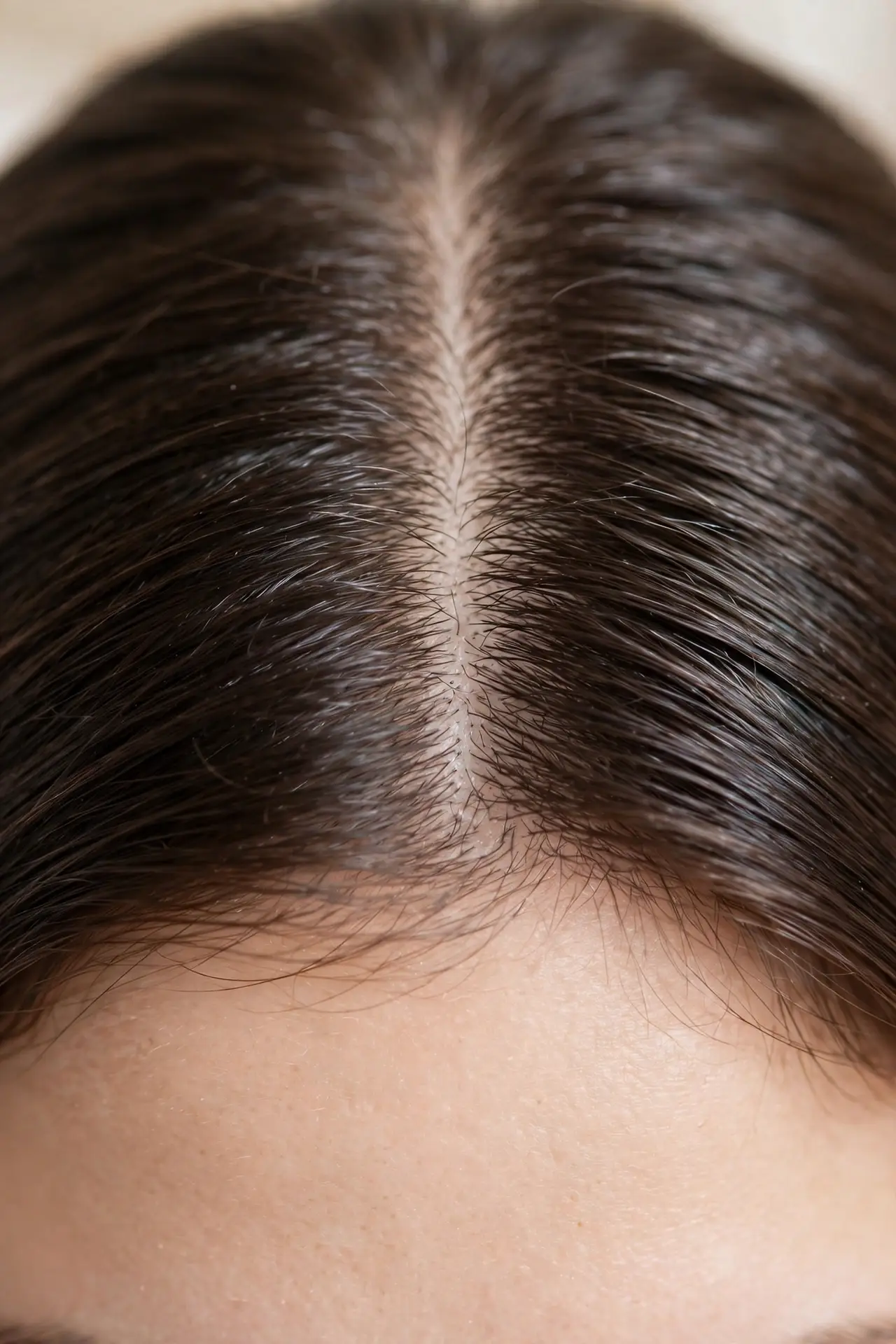
Hair products are made for your lengths, not the skin underneath. Conditioner, dry shampoo, styling creams, all of it builds up at the roots over time.
That buildup can clog follicles and throw your scalp’s balance off. Think of it like skincare: you would never skip cleansing your face for a week, but most people never properly cleanse their scalp at all.
Healthy hair starts at the root, literally. When your scalp is calm, clean, and hydrated, your hair grows in stronger and looks better along the whole strand.
Signs Your Scalp Is Asking for Help

Your scalp talks to you, you just have to listen. These are the most common signals it is out of balance:
- Itching or tenderness, especially a day or two after washing
- Flakes on your shoulders or in your part line
- Hair that goes oily fast at the roots but dry at the ends
- A tight, dry feeling after shampooing
- Redness or small bumps along the hairline
One rough week does not mean disaster. But if two or more of these keep showing up, your scalp needs a proper scalp care routine, not just a new shampoo.
If you notice sudden heavy shedding, patches of hair loss, or painful sores, skip the DIY and see a dermatologist. Some scalp problems need a professional, and the sooner the better.
Your Weekly Scalp Care Routine, Step by Step
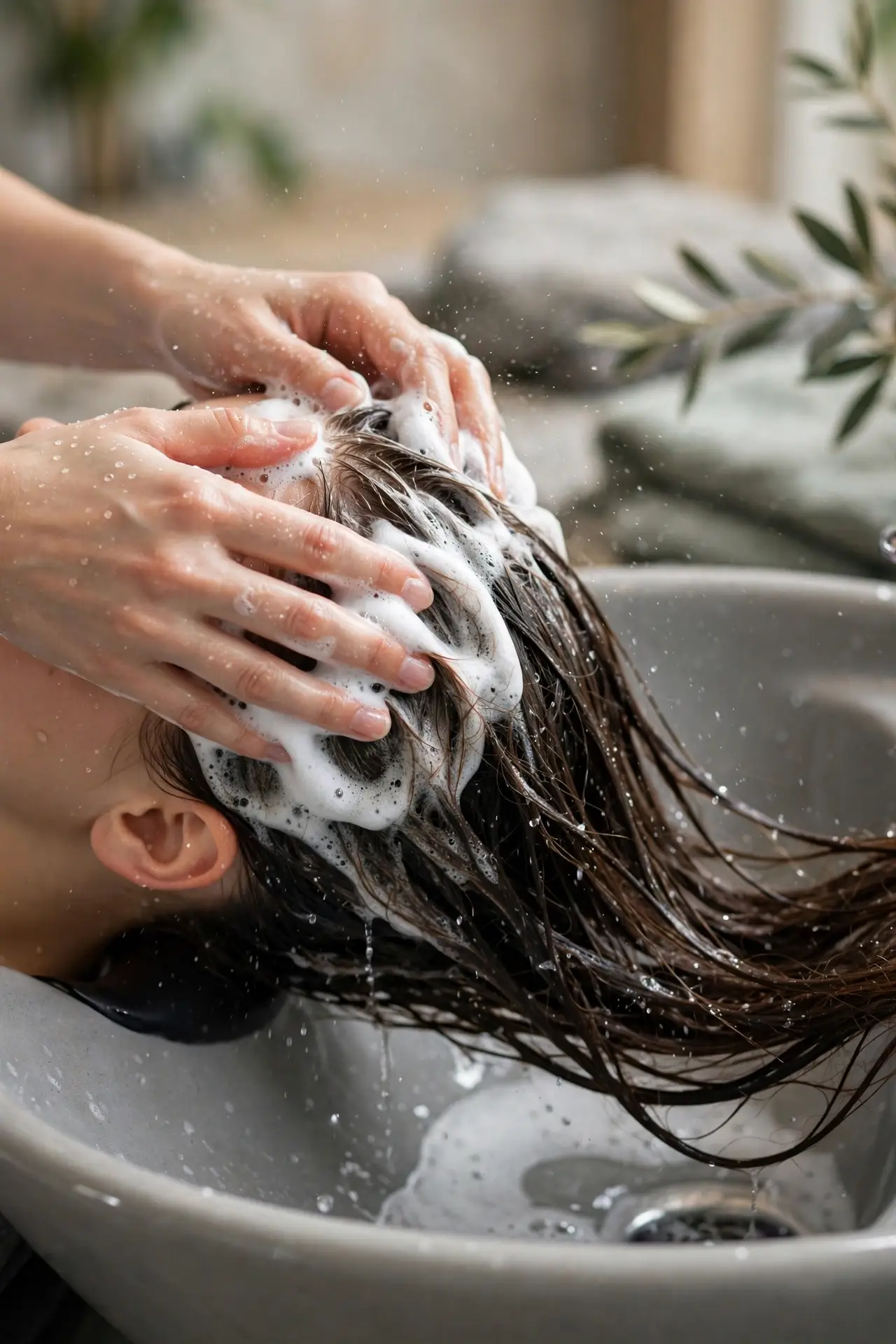
Here is the scalp care routine in order. Most of it happens on wash day, and the whole thing takes about ten extra minutes.
- Exfoliate before you cleanse. Apply your scrub or treatment to a dry or damp scalp and massage gently for two to three minutes.
- Rinse, then double cleanse. The first shampoo breaks down oil and product. The second one actually cleans the skin. Focus both on the scalp, not the lengths.
- Condition the lengths only. Keep conditioner off your scalp, it adds to buildup.
- Massage for three to five minutes. Do this while the second shampoo is in. Fingertips only, never nails.
- Apply your treatment. On towel-dried hair, work a scalp serum or tonic along your part lines.
- Dry the roots fully. Damp scalps get itchy and flaky fast. Do not go to bed with wet roots if you can help it.
That is the whole routine. Once a week is the rhythm for most people, with a few light steps folded into daily life.
This pairs well with a fresh haircut routine that keeps your ends as healthy as your roots.
How to Exfoliate Your Scalp (And How Often)
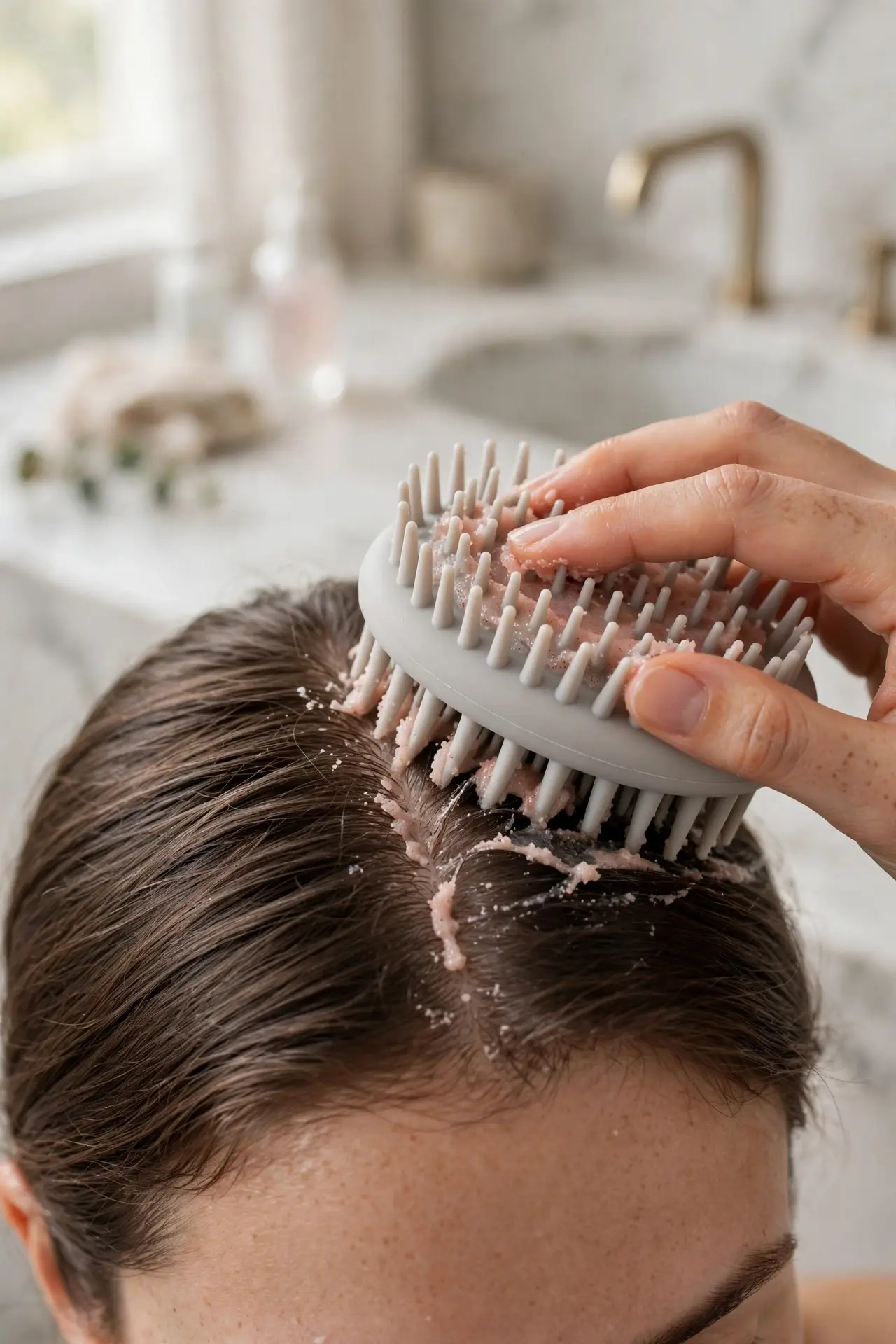
Exfoliation is the step most people skip, and it makes the biggest difference. Dead skin and product residue sit on your scalp just like they do on your face, and washing alone does not always lift them off.
Once a week is the sweet spot for most scalps. More than that can strip your natural oils and cause exactly the irritation you are trying to fix.
You have a few good options:
- Physical scrubs: grainy formulas with sugar or salt. Pick fine grains, and skip these if your scalp is currently irritated or scratched.
- Chemical exfoliants: leave-on treatments with salicylic acid or AHA/BHA. Gentler than they sound, and great for oily or flaky scalps.
- Scalp brushes: soft silicone bristles you use in the shower with shampoo. The easiest entry point if you are new to this.
Whichever you choose, be gentle. Pressing hard does not clean better, it just scratches.
The 4-Minute Scalp Massage That Boosts Circulation
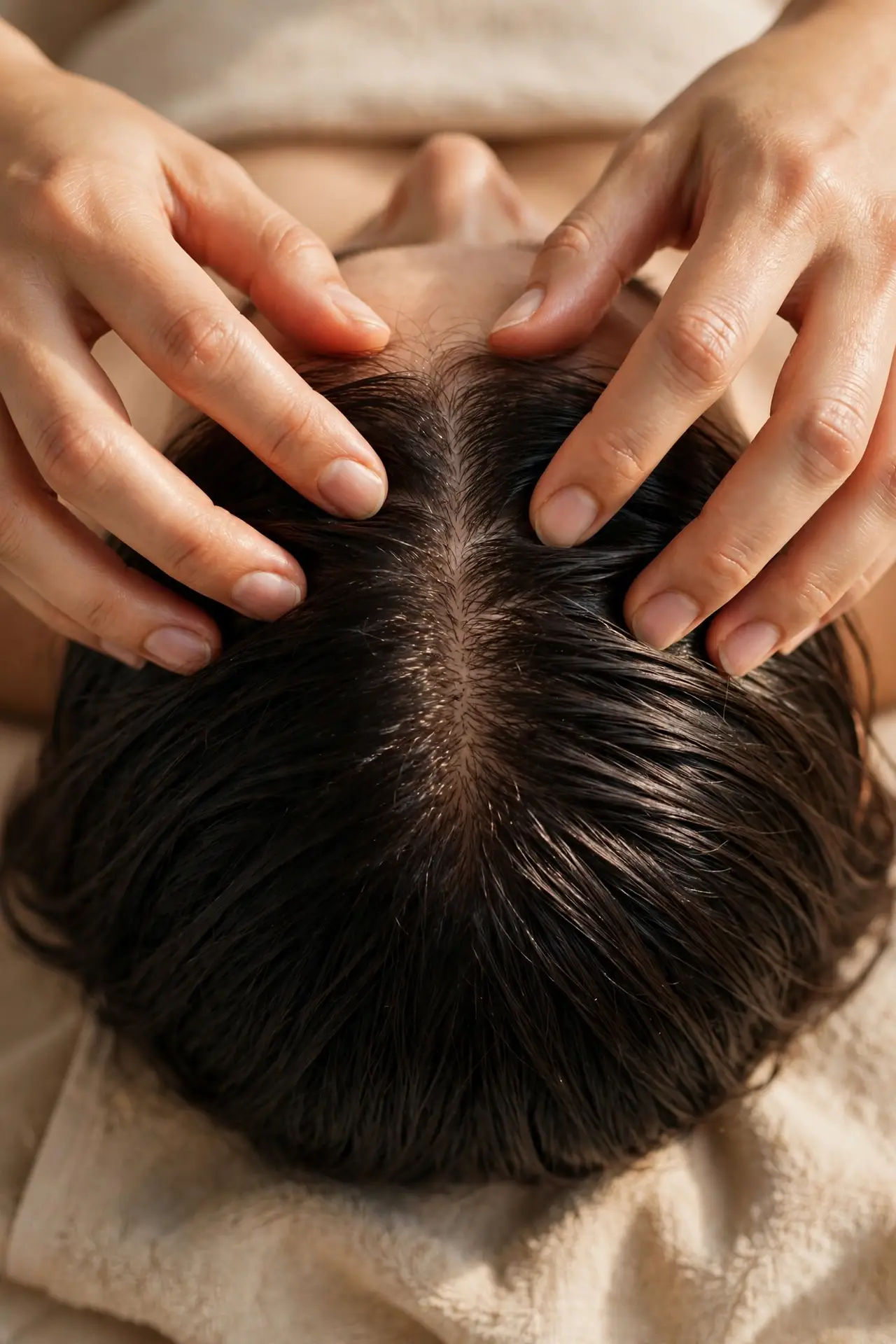
Massage is the most underrated part of any scalp care routine. It feels great, it helps loosen buildup, and some small studies suggest daily massage may support thicker-feeling hair over time.
You do not need a technique video or special tools. Just your fingertips and four minutes:
- Start at the hairline and work back toward the crown in small circles.
- Use the pads of your fingers, firm but comfortable pressure, never your nails.
- Spend extra time on the temples and the back of the head, where tension collects.
- Move your scalp with your fingers rather than sliding them across it.
- A silicone scalp brush works too if you prefer a tool.
Do it while your shampoo sits, or dry in the evening while you watch something. Consistency matters more than perfection here.
Serums and Treatments Worth Adding
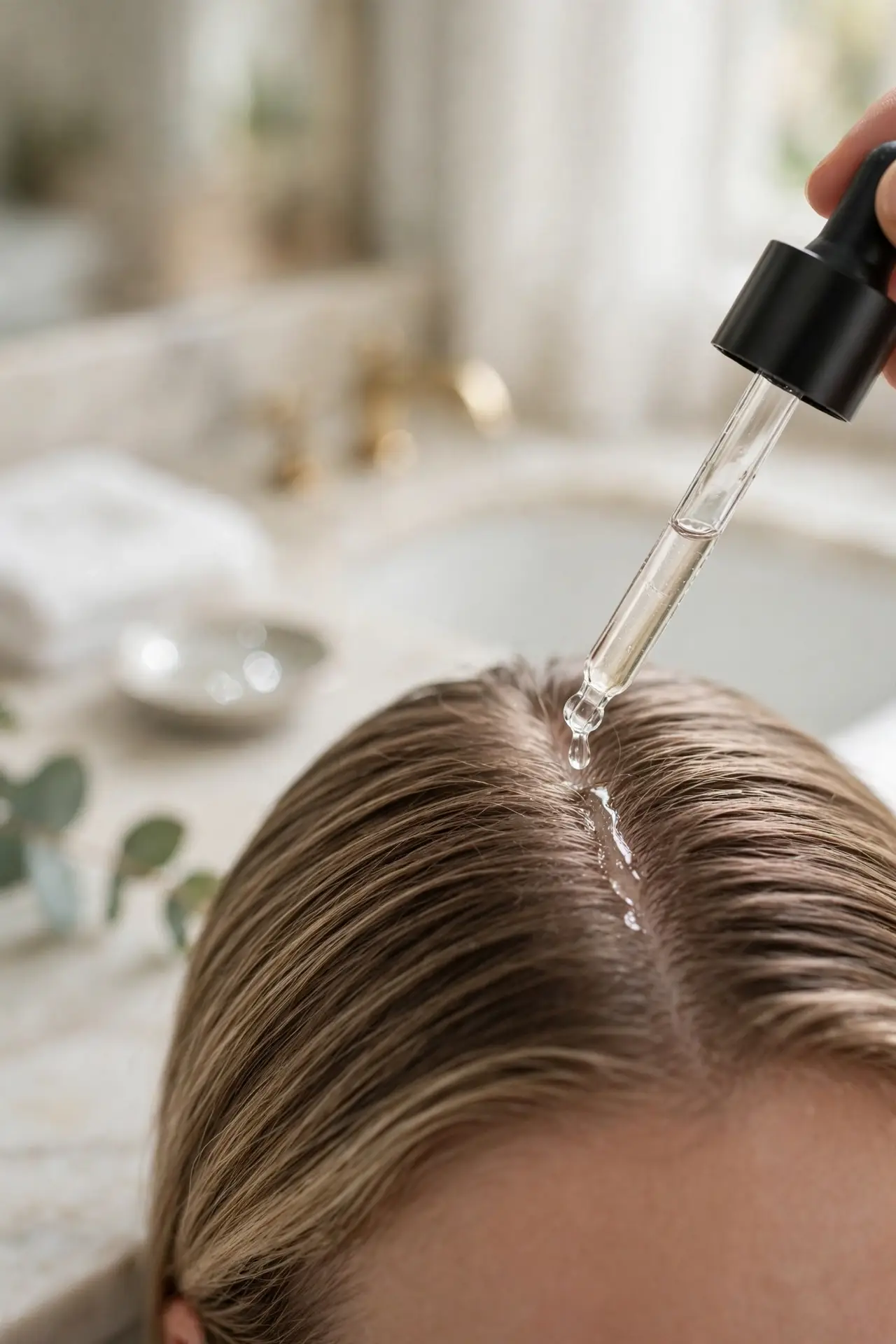
After cleansing, your scalp is a clean slate. That is the best time to feed it something useful.
A lightweight scalp serum or tonic hydrates the skin and keeps your barrier happy. Look for ingredients like niacinamide, aloe, salicylic acid for oily scalps, or soothing botanicals like rosemary and tea tree.
Apply along your part lines, not all over your hair. A dropper or nozzle tip helps you reach the skin instead of coating the strands.
If you color your hair, your scalp deals with extra stress from dyes and lighteners. Choosing a low-maintenance color or planning your shades carefully, like these bold tri-color ideas means less chemical exposure for your scalp between appointments.
One product is enough to start. You do not need a five-serum shelf.
Mistakes That Sabotage Your Scalp Care Routine

Doing the right steps wrong can undo all your good work. Watch out for these common slip-ups:
- Scrubbing with your nails. It feels satisfying, but it scratches the skin and makes flaking worse. Fingertips or a soft brush, always.
- Exfoliating too often. Daily scrubbing strips your scalp and triggers more oil production, not less. Stick to weekly.
- Piling conditioner on the scalp. Conditioner is for mid-lengths to ends. On the scalp it just adds to buildup.
- Scalding hot showers. Very hot water dries out scalp skin fast. Warm is plenty.
- Ignoring it for months. Scalp care is maintenance, not a rescue mission. A little, regularly, beats a lot, once.
Frequently Asked Questions
How often should I do a scalp care routine?
Exfoliate once a week, massage a few minutes on every wash day, and use a serum as needed. Most people land somewhere between two and three wash days a week. Adjust to your hair type and lifestyle.
Can scalp care help my hair grow faster?
Hair grows at its own pace, and no routine changes that speed dramatically. But a clean, calm scalp supports stronger growth, less breakage, and less shedding, which is how hair actually gets longer.
Is scalp exfoliation safe for sensitive scalps?
Yes, if you choose the right method. Skip gritty physical scrubs when your scalp is irritated and go for a gentle chemical exfoliant or a soft brush instead. When in doubt, patch test first.
Should I use scalp oil or scalp serum?
Both work, they just feel different. Serums are lighter and absorb fast, which suits oily or fine hair. Oils are richer and better for dry, tight scalps. Pick the texture you will actually use.
When should I see a dermatologist about my scalp?
If you have sudden or patchy hair loss, persistent sores or scabs, severe itching that does not improve, or thick scaly patches, book an appointment. Cosmetics have limits, and a professional diagnosis saves time.
Your Scalp Is Skin, Treat It That Way
That is the whole philosophy in one sentence. Cleanse it gently, exfoliate it weekly, massage it often, and feed it something nourishing after.
Give your scalp care routine a few weeks of consistency before you judge it. Healthy scalps are built slowly, but the payoff shows up in every strand.





Pingback: Curly Wolf Cut: How To Ask For It And Style It
Pingback: Glass Hair Routine: How To Get Mirror Shine
Pingback: Hair Mask At Home: 9 DIY Recipes That Work
Pingback: Hair Growth Routine: 9 Steps To Longer Hair
Pingback: How To Make Hair Grow Faster: 9 Proven Tips That Work
Pingback: Curly Hair Routine For Wavy Hair: Best 2A-2C Styling Guide
Pingback: Braids For Black Women Hairstyles That Protect And Stay Beautiful For Weeks
Pingback: 4 Cornrows Braids: A Simple Style That Works For Every Week
Pingback: 4c Hairstyles Natural Hair Loves: Coils, Puffs, And Styles That Work With Your Texture